

By Stephen DeAngelis
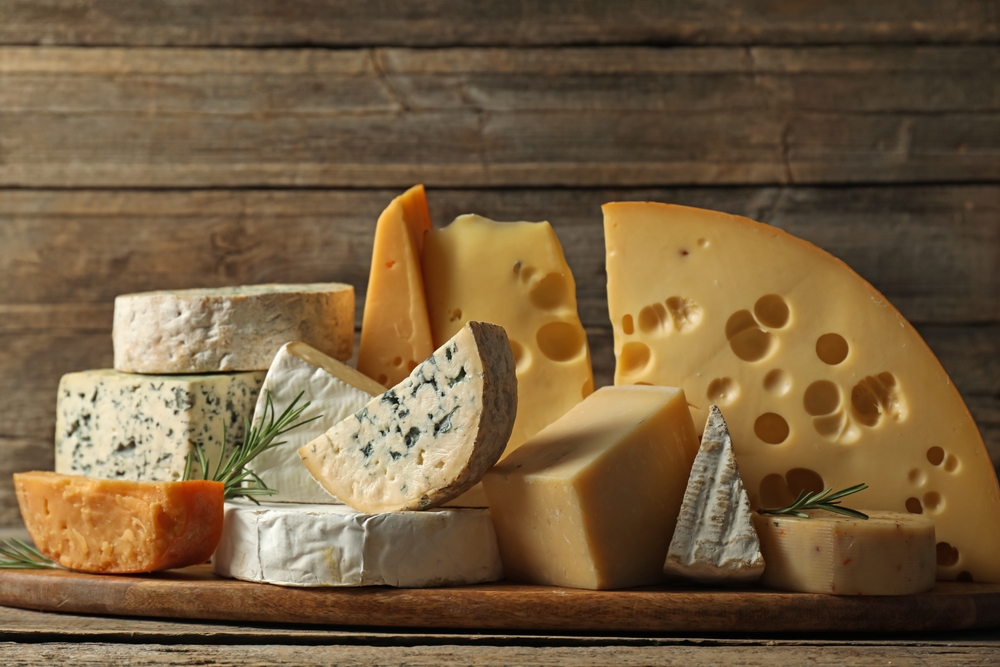
A comedian once appeared on the Ed Sullivan Show dressed as a southern preacher and performed a routine in which he repeatedly uttered the phrase, “Praise Cheeses.” He started with the story of Adam and Eve in the Garden of Edam and noted they were kicked out because they hadn’t been gouda. A litany of cheese-related jokes followed. Cheese, however, is no joke. Cheese is one of the world’s oldest foods. Wikipedia notes, “The production of cheese predates recorded history, beginning well over 7,000 years ago. … The earliest cheeses were sour and salty and similar in texture to rustic cottage cheese or present-day feta. … Most named cheeses known today were initially recorded in the late Middle Ages. The existence of cheddar has been recorded since the 1500s, the production of Parmesan (Parmigiano) began in 1200, Gouda in 1697, and Camembert in 1791. Cheeses diversified in Europe with locales developing their own traditions and products when Romanized populations encountered unfamiliar neighbors with their own cheese-making traditions.” In the past, cheese has often been viewed as unhealthy due to its saturated fat and sodium content — but new studies could change that thinking.
Eat Cheese, If You Please
A few years ago, a group of scholars completed an umbrella review of studies about cheese consumption and health outcomes. They noted, “Cheese is generally a nutrient-dense and well-tolerated fermented dairy product consumed worldwide. However, the health effects of cheese consumption remain a matter of controversy. On one hand, cheese is a rich source of high-quality protein (mainly casein), lipids, minerals (e.g., calcium, phosphorus, and magnesium), and vitamins (e.g., vitamin A, K2, B2, B12, and folate), and probiotics and bioactive molecules (e.g., bioactive peptides, lactoferrin, short-chain fatty acids, and milk fat globule membrane), which may provide various health benefits. On the other hand, cheese contains relatively high contents of saturated fat and salt, which are perceived as unfavorable dietary components for cardiovascular health.”[1] They concluded, “Cheese consumption has neutral to moderate benefits for human health.”
With cheese consumption on the rise, exploring its health benefits is important. Medical writer Julie Corliss reports, “Cheese consumption in [the United States] has been climbing, reaching an all-time high of 42 pounds per person [in 2024]. Yet most cheese varieties contain a fair bit of saturated fat and sodium — two things people with heart disease are often urged to limit.”[2] She adds, “Still, there's no need to banish cheese from your diet. In fact, a daily serving of this popular dairy product may be good for your heart. For a 2023 review in Advances in Nutrition, researchers pooled findings from dozens of observational studies looking at cheese consumption and health. They found that eating some cheese — averaging 1.5 ounces per day — was linked to a lower risk of heart disease, stroke, and death from cardiovascular disease.”
According to Corliss, there are scientific reasons for cheeses’ heart-healthy attributes. She explains, “Bacteria in many cheese varieties (such as Asiago, cheddar, and Parmesan) break down milk proteins to create compounds similar to those found in a widely used class of blood pressure drugs known as ACE inhibitors. The fermentation of dairy products also produces vitamin K, which has been shown to help slow the buildup of harmful calcium deposits in the heart's arteries and valves. Muenster, Camembert, and Edam cheeses contain the highest amounts of vitamin K.”
From Your Heart to Your Head
Lifestyle writer Korin Miller reports, “Full-fat cheeses have been blamed as contributors for everything from obesity to heart disease, but surprising new research suggests cheeses like Brie and Gouda may lower your risk of dementia. The connection seems random — and it is on some level — but experts say there may be something here.”[3] Some people may believe this is just wishful thinking. After all, dementia is a huge problem. Journalist Ava Levinson reports, “It’s estimated that 57 million people lived with dementia in 2021, and there are around 10 million new diagnoses every year. According to a 2019 analysis from the Global Burden of Disease, by 2050 the number of cases could reach 153 million.”[4] But recent reports verify there is a link between eating cheese and preventing dementia.
Authors of the study note, “The association between dairy intake and dementia risk remains uncertain, especially for dairy products with varying fat contents. The aim of this study was to investigate the association between high-fat and low-fat dairy intake and dementia risk.”[5] The study included 27,670 participants and spanned a quarter of a century. Their conclusion, “Higher intake of high-fat cheese and high-fat cream was associated with a lower risk of all-cause dementia, whereas low-fat cheese, low-fat cream, and other dairy products showed no significant association.” Researchers added, “They also had a lower prevalence of diabetes, hypertension, CVD, and stroke and were less likely to use lipid-lowering medication.”
To state the obvious, these results were a surprise to many people. Levinson tempers the exuberance over the results by observing, “The study doesn’t mean that cheese will save you from dementia. (Unfortunately.)” And, Tara Spires-Jones, division lead in the UK Dementia Research Institute, told Levinson, the length of study was also problematic. She said, “It is highly likely that diet and other lifestyle factors changed in those 25 years.” Dietitian Keri Gans, agrees with that assessment. She told Miller that people should take these findings with a grain of salt. She said, “This type of study can’t prove that cheese lowered dementia risk, and the findings may reflect the overall eating patterns and lifestyles of people who include cheese, rather than a specific effect of cheese alone.”
Concluding Thoughts
There is a common idiom that states: You are what you eat. According to the staff at Ginger Software, “The first mention of the phrase 'you are what you eat' came from the 1826 work Physiologie du Gout, ou Medetations de Gastronomie Transcendante, in which French author Anthelme Brillat-Savarin wrote: ‘Tell me what you eat and I will tell you what you are.’”[6] Studies like the ones discussed above provide some validity to that view. However, Gans notes, “Overall, eating patterns and lifestyle factors, such as heart health, physical activity, sleep, and the management of chronic conditions, matter far more than any single food.” I believe she is correct. However, in this article (with apologies to Shakespeare), I came to praise cheeses, not to bury them.
Footnotes
[1] Mingjie Zhang, Xiaocong Dong, Zihui Huang, Xue Li, Yue Zhao, Yingyao Wang, Huilian Zhu, Aiping Fang, and Edward L Giovannucci, “Cheese consumption and multiple health outcomes: an umbrella review and updated meta-analysis of prospective studies,” National Library of Medicine, June 2023.
[2] Julie Corliss, “Eat cheese, if you please,” Harvard Health Publishing, 1 May 2025.
[3] Korin Miller, “Scientists Find Full Fat Cheese Helps Lower Dementia Risk in Surprising Study,” Prevention, 20 December 2025.
[4] Ava Levinson, “New Study Finds a Surprising High-Fat Food That May Protect Your Brain Health,” Inc., 21 December 2025.
[5] Yufeng Du, Yan Borné, Jessica Samuelsson, Isabelle Glans, Xiaobin Hu, Katarina Nägga, Sebastian Palmqvist, Oskar Hansson, and Emily Sonestedt, “High- and Low-Fat Dairy Consumption and Long-Term Risk of Dementia,” Neurology, 17 December 2025.
[6] Staff, “You Are What You Eat,” Ginger Software.